Red light therapy has moved far beyond a niche recovery tool. Today, it is increasingly becoming part of the modern wellness environment — alongside saunas, cold immersion, quality sleep, movement and other rituals designed around recovery and long-term wellbeing.

But as red light therapy becomes more popular, choosing the right panel has also become more complicated.

Panel size, wavelengths, light intensity, treatment area, controls and intended use can vary significantly from one system to another. A larger panel is not automatically the right choice, and the highest power specification does not necessarily tell you whether a device will suit the way you actually plan to use it.

This guide explains what to look for when choosing a red light therapy panel in 2026 — and how to select a system that fits your space, routine and wellness goals.


What Is Red Light Therapy?

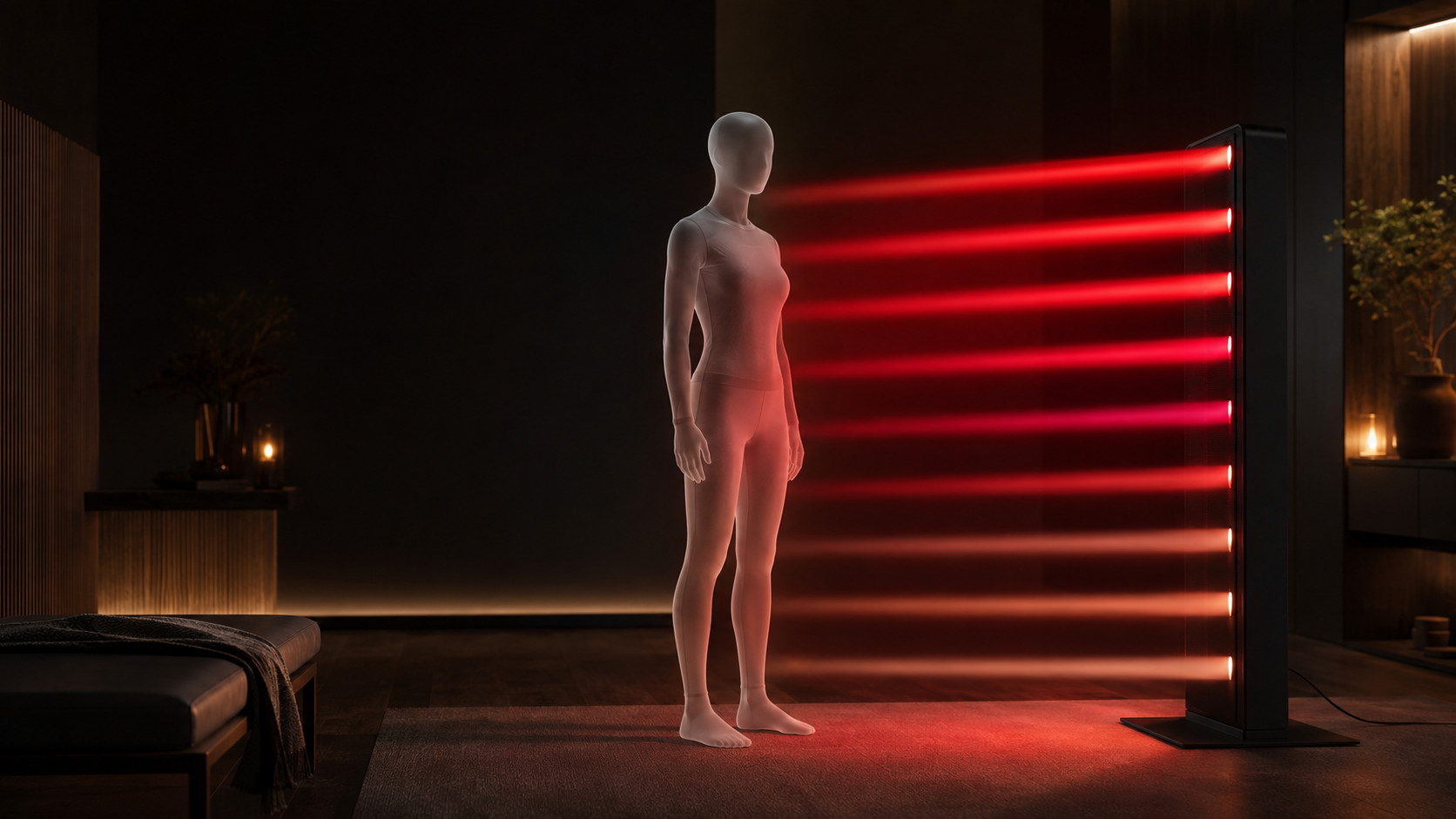
Red light therapy, often discussed under the broader term photobiomodulation, uses specific wavelengths of visible red and near-infrared light.

Unlike a sauna, red light therapy is not primarily about heating the body. Instead, carefully selected wavelengths of light are delivered to the treatment area.

Red and near-infrared wavelengths interact differently with the body depending on wavelength, light intensity, exposure time, distance and the area being treated.

This is why choosing a red light therapy panel should involve more than simply comparing wattage.

For a deeper introduction to the technology and its potential role within a wellness routine, explore our guide to Red Light Therapy Benefits.


1. Start With the Treatment Area

One of the most important decisions is also one of the simplest:

How much of your body do you want to expose during one session?

A compact panel may be ideal if you primarily want targeted sessions for areas such as:

  • face
  • shoulders
  • knees
  • lower back
  • arms
  • specific muscle groups

Larger panels allow significantly more surface area to be illuminated simultaneously.

That becomes important if red light therapy is intended to become a regular part of a daily wellness or recovery routine.

Instead of repositioning a small device several times, a larger panel can cover the torso, legs or most of the body within one session.

For example, the Celsium Core is designed as a compact option for targeted use, while larger systems such as Celsium Studio and Celsium Ultra are designed for significantly greater body coverage.


Targeted vs full-body red light therapy

Neither approach is automatically better.

Choose targeted therapy when:

  • space is limited;
  • portability matters;
  • you want to focus on specific areas;
  • several shorter targeted sessions suit your routine.

Consider a larger or full-body system when:

  • you want broader exposure;
  • treatment efficiency is important;
  • multiple body areas are part of your routine;
  • the panel will be installed permanently;
  • it will be used in a professional wellness environment.

The best panel is ultimately the one you will use consistently.


2. Look Beyond 660 nm and 850 nm

Many traditional red light therapy panels were built primarily around two wavelengths:

660 nm red light and 850 nm near-infrared light.

These remain widely recognised wavelengths, but modern systems can provide much more flexibility.

Advanced Celsium panels use a multi-wavelength platform combining:

480 nm, 590 nm, 630 nm, 660 nm, 670 nm, 810 nm, 830 nm, 850 nm and 1060 nm.

These wavelengths cover several areas of the visible and near-infrared spectrum.

The important point, however, is not simply having the largest possible number of wavelengths.

What matters is the ability to control them intelligently.

A quality multi-wavelength panel should allow users to select or adjust light according to the intended session instead of simply operating every wavelength at maximum output all the time.

For a detailed explanation, read our guide to Red Light Therapy Wavelengths and What Each Wavelength Does.


3. Understand Irradiance — Not Just Wattage

One of the most misunderstood red light therapy specifications is power.

A panel may advertise a large electrical wattage, but electrical consumption alone does not tell you how much light reaches the body.

A more relevant specification is irradiance, normally expressed as mW/cm² or W/m² at a specified distance.

Distance matters.

A panel measured from very close range will normally produce a higher irradiance figure than the same panel measured further away.

When comparing systems, always check:

  • irradiance;
  • measurement distance;
  • treatment area;
  • beam angle;
  • intensity adjustment;
  • recommended session distance.

For this reason, a well-designed system with adjustable intensity can be more useful than simply chasing the highest possible number.

Red light therapy is ultimately about delivering an appropriate light dose — not creating the brightest room possible.


4. Choose Adjustable Intensity

Modern wellness should adapt to the individual.

Your preferred light intensity may differ depending on whether you are using the panel for a short targeted session or a longer, larger-area routine.

Adjustable intensity also makes a panel easier to integrate into different environments.

Celsium professional-grade panels provide adjustable light intensity, allowing sessions to be configured instead of relying on one fixed output.

For users who want greater control over their routines, this becomes an important feature.


5. Consider Independent Wavelength Control

This is where more advanced systems differentiate themselves.

Some panels simply turn red light and near-infrared light on or off.

More sophisticated systems allow wavelengths or wavelength groups to be controlled independently.

The Celsium Prime, for example, incorporates nine wavelengths together with individually adjustable wavelength configurations, intensity control and pulse settings.

This makes the system more flexible for users who want to develop different routines rather than using exactly the same light configuration every session.

For a modern longevity or recovery space, configurability can be just as important as maximum output.


6. Continuous vs Pulsed Light

Many advanced red light therapy systems now include pulse functionality.

In continuous mode, the LEDs remain illuminated throughout the session.

In pulse mode, light is switched on and off at a selected frequency.

Pulse settings should not be viewed as a shortcut to better results. Research into different pulsing protocols is still evolving, and there is no single pulse frequency that is universally appropriate for every goal.

However, adjustable pulse control provides additional flexibility for advanced users and professional environments.

Celsium panels combine continuous operation with configurable pulse modes, allowing the system to support both straightforward everyday sessions and more customised routines.


7. Think About How the Panel Will Actually Be Used

Before choosing a red light panel, imagine your normal week.

Will you:

use it for ten minutes before work?

integrate it into your gym recovery routine?

place it beside your sauna?

create a dedicated longevity room?

install it in a hotel, spa, recovery studio or wellness club?

The physical environment should influence the product you choose.

A compact unit makes sense when portability and targeted use matter.

A larger panel becomes more attractive when the intention is to create a permanent wellness station.

And in commercial environments, durability, controls, coverage and ease of operation become increasingly important.


Which Celsium Red Light Therapy Panel Should You Choose?

The Celsium Red Light Therapy collection is designed around different levels of coverage rather than a one-size-fits-all approach.

Celsium Core — For Targeted Therapy

The Celsium Core is the most compact option in the range.

With dimensions of approximately 320 × 230 × 65 mm, it is designed for targeted red and near-infrared light sessions while maintaining the advanced features found across the Celsium range.

It is particularly suitable for:

  • targeted body areas;
  • smaller homes;
  • travel;
  • personal wellness spaces;
  • users entering red light therapy for the first time.

Despite its compact size, Core includes adjustable multi-wavelength light, pulse functionality, dimming, touchscreen controls and app connectivity.

Best for: targeted therapy and maximum flexibility in a compact format.


Celsium Prime — The All-Round Home Choice

For many home users, Celsium Prime may represent the ideal balance between size and performance.

Prime measures approximately 920 × 230 × 65 mm and incorporates 216 dual-chip LEDs with nine available wavelengths.

Its larger coverage means fewer repositioning steps compared with a compact panel while still remaining practical for residential wellness spaces.

Prime also provides independent control of wavelength, intensity and pulse settings.

It is especially well suited to:

  • home recovery spaces;
  • fitness and performance routines;
  • partial-body sessions;
  • dedicated home gyms;
  • sauna and wellness rooms.

Best for: users looking for a premium everyday red light therapy panel without moving immediately to a full-body installation.


Celsium Elite — More Coverage for Serious Wellness Routines

The Celsium Elite moves further toward larger-area treatment.

It is designed for users who want red light therapy to become a significant part of their wellness or recovery routine rather than an occasional targeted treatment.

The increased treatment area makes Elite particularly relevant for:

  • athletes;
  • regular training and recovery;
  • premium home gyms;
  • longevity rooms;
  • private wellness studios.

For users deciding between Prime and a larger professional system, Elite provides a natural step up in coverage.

Best for: frequent use and larger-area home wellness.


Celsium Studio — Professional-Scale Red Light Therapy

The Celsium Studio is designed for significantly greater body coverage.

Measuring approximately 1500 × 420 × 70 mm with 720 dual-chip LEDs and up to 1200 W output, Studio brings red light therapy much closer to a full-body experience.

Its size makes it particularly suitable for:

  • premium home wellness rooms;
  • recovery studios;
  • gyms;
  • hotels;
  • spas;
  • longevity centres;
  • professional wellness facilities.

Studio combines adjustable wavelengths with pulse modes, dimming, touchscreen control, Bluetooth connectivity and mobile app control.

Best for: professional environments or home users who want broad body coverage.


Celsium Ultra — The Full-Body Flagship

At the top of the range sits Celsium Ultra.

With dimensions of approximately 1890 × 580 × 65 mm, 1152 dual-chip LEDs and approximately 1650 W actual power, Ultra is designed around large-scale, full-body red light therapy.

Rather than repeatedly repositioning a smaller device, Ultra allows multiple body areas to be exposed simultaneously.

It also offers nine wavelengths, individually adjustable intensity, pulse control, touchscreen operation, remote control and app connectivity.

Ultra is particularly relevant for:

  • complete home longevity rooms;
  • high-end private wellness spaces;
  • professional recovery centres;
  • luxury spas;
  • hotels and resorts;
  • performance facilities.

Best for: users looking for the most complete Celsium red light therapy experience.


Creating a Complete Wellness Routine

One reason red light therapy is becoming increasingly relevant is that it does not have to exist as an isolated treatment.

Modern wellness spaces increasingly bring several rituals together.

A home or professional wellness environment might combine:

HEAT → LIGHT → COLD → REST

For example:

Sauna

Heat creates a completely different physiological and sensory experience and has been part of wellness culture for centuries.

Red Light Therapy

A controlled light session can become another dedicated part of the recovery routine.

Cold Plunge

Cold immersion creates contrast and provides another distinctive recovery stimulus.

Rest

Recovery ultimately requires time, hydration and quality sleep.

Rather than treating each product as a separate device, Celsium approaches wellness as an environment.

A sauna, red light therapy panel and cold plunge can become different elements of the same daily ritual.


Red Light Therapy at Home or in a Professional Space?

Red light therapy systems are increasingly being installed in both residential and commercial wellness environments.

At Home

The priorities are usually:

  • simplicity;
  • design;
  • compact footprint;
  • quiet operation;
  • easy controls;
  • integration with an existing wellness space.

For many home users, Core, Prime or Elite will provide sufficient coverage.

For dedicated home gyms or complete longevity rooms, Studio or Ultra may be more appropriate.

Commercial Use

Hotels, spas, wellness centres and recovery studios have different priorities.

Coverage, durability and user experience become increasingly important.

A larger panel can also make sessions easier to manage because users do not need to reposition the device repeatedly.

For these environments, Studio and Ultra are the strongest options within the Celsium collection.


What Should You Look for Before Buying a Red Light Therapy Panel?

Before making your decision, consider these factors:

  1. Treatment area — targeted, partial body or full body.
  2. Wavelengths — understand which wavelengths the system provides.
  3. Irradiance — check output together with measurement distance.
  4. Intensity control — the ability to adjust output improves flexibility.
  5. Wavelength control — advanced systems allow more customised routines.
  6. Pulse functionality — useful for users who want advanced configuration.
  7. Panel dimensions — consider where the system will physically live.
  8. Controls — touchscreen, remote control and app connectivity can improve everyday use.
  9. Electrical compatibility — particularly important when purchasing internationally.
  10. Warranty and manufacturer support — a red light panel should be viewed as a long-term wellness product.

The Best Red Light Therapy Panel Is the One That Fits Your Routine

There is no universal “best” red light therapy panel.

A compact Core may be ideal for someone who wants targeted sessions.

Prime may be the better option for everyday home wellness.

Elite provides greater coverage for more serious routines.

Studio can form the centrepiece of a dedicated wellness room.

And Ultra is designed for users seeking a genuine full-body system.

The goal is not to buy the largest device available.

The goal is to build a wellness routine you can realistically maintain.

At Celsium, we see red light therapy as part of something larger — a modern approach to recovery, longevity and intentional living.

Explore the Celsium Red Light Therapy collection and choose the system that fits your space, your routine and the way you want to feel.

Frequently Asked Questions

What size red light therapy panel should I buy?

For targeted areas such as the face, knee or shoulder, a compact panel may be sufficient. If you want to treat several larger body areas during the same session, a larger panel can make the routine significantly more convenient.

Is a full-body red light therapy panel better?

Not necessarily. Full-body systems provide greater coverage and convenience, but a smaller system may be better when portability, budget or targeted use are the priority.

What wavelengths should a red light therapy panel have?

660 nm and 850 nm are among the best-known red and near-infrared wavelengths, but advanced systems increasingly combine several wavelengths. Celsium systems use a broader nine-wavelength platform ranging from visible wavelengths through near-infrared.

Is higher wattage always better?

No. Wattage alone does not determine the light dose reaching the body. Irradiance, treatment distance, exposure time and treatment area should be considered together.

Can red light therapy be combined with sauna use?

Many people incorporate both into a wider wellness routine because they provide very different experiences. Red light therapy should not simply be treated as a replacement for sauna heat. Follow the operating instructions for each individual product and build your routine progressively.

Which Celsium panel is best for home use?

For most residential applications, Core, Prime or Elite provide the most practical balance between footprint and coverage. Studio and Ultra are more suitable for users who want larger-area or near full-body sessions.

Which Celsium panel is best for commercial use?

Studio and Ultra are designed around larger coverage and are therefore particularly suitable for spas, gyms, hotels, recovery studios and professional wellness environments.



Dive Into The Blog

Subscribe to our newsletter

Be the first to hear about new saunas, wellness tips,

and exclusive offers.

Subscription Form
ContactForm

Choose Your Region

To ensure accurate pricing and delivery details, please confirm your location.

Continue

You can update this anytime from the menu.