Key takeaways
- The deciding question for a renter is not price, it is whether the unit needs fixed electrical work, permanent foundations, or plumbing. Anything that does is usually out.
- Plug-in units that run from a standard domestic socket are the practical category for most renters. Higher-powered traditional heaters generally need a dedicated circuit and an electrician.
- Get landlord permission in writing before anything arrives, even for freestanding units. Most disputes are about drilling, weight, moisture and the electrical load, not the sauna itself.
- Anything you buy as a renter should be designed to be disassembled and moved. Ask that question before you ask about temperature.
- Moisture management matters more indoors than outdoors. A sauna in a rented flat needs a ventilation plan or you will be having a conversation about mould.
Renting has quietly become the main reason people give up on the idea of a sauna at home. Not budget, not space. The assumption that a sauna is a building, and you do not own the building.
That assumption is out of date. A good part of this category no longer requires foundations, a dedicated circuit or a hole in anything. What it does require is knowing which questions to ask before you buy, because the specification that matters to a renter is completely different from the one that matters to a homeowner.
Here is the honest version, including the parts where the answer is “not yet, and here is what to do instead”.
The three questions that decide everything
1. Does it need fixed electrical work? This is the big one. Lower-powered units generally run from a standard domestic socket. Traditional sauna heaters above a certain output usually need a dedicated, hard-wired circuit installed by a qualified electrician, which is permanent alteration to someone else’s property.
2. Does it need permanent fixing or foundations? Freestanding sits on the floor or on a prepared surface and can be moved. Anything bolted, screwed, plumbed or set into a base is a different conversation with your landlord.
3. Can it be disassembled and moved? Renters move. A unit that assembles in panels and comes apart the same way holds far more value across a tenancy than one that has to be craned in.
What actually works for renters
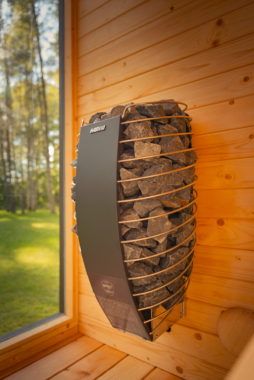
Freestanding indoor cabins. A self-contained cabin that sits inside an existing room, assembles from panels, and needs no structural work. The category that most often solves the renter problem outright, provided the electrical requirement fits what the property already has.
Explore: Indoor Saunas
Portable and tent saunas. Fabric or frame units, low cost, genuinely temporary, pack away entirely. Not a luxury experience, and honest about that. A reasonable way to find out whether you will actually use a sauna before spending real money.
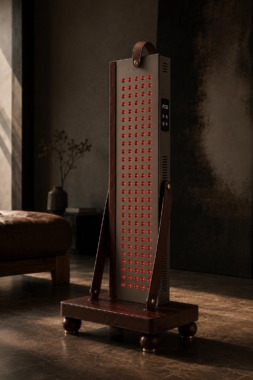
Infrared blankets and single-person units. Small footprint, plug-in, store in a cupboard. They do not produce löyly and are not a substitute for a sauna room, but they deliver heat in a flat with no garden.
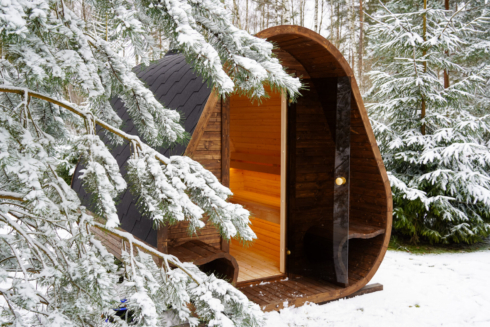
A movable outdoor cabin, if you have a garden and a cooperative landlord. Some outdoor cabins are designed to be delivered as a unit and relocated later. This becomes a real option when you have a long tenancy, an understanding landlord and an agreement in writing.
What usually does not work
- Anything requiring a new dedicated electrical circuit, unless your landlord agrees to it as a property improvement and pays for or approves the work.
- Anything requiring drainage or plumbing connections.
- Anything requiring a concrete base or ground screws in a garden you do not own.
- Wood-fired units in most rented properties, on insurance and flue grounds alone.
The landlord conversation
Ask early, ask in writing, and ask about the right things. A landlord’s real concerns are:
- Weight. Especially above ground floor.
- Moisture. The legitimate one. Come with a ventilation answer.
- Electrical load. Confirm the unit runs on a standard socket and say so explicitly.
- Making good. Confirm nothing is fixed, drilled or plumbed, and that the space returns exactly as it was.
- Insurance. Check whether their policy or yours needs to know.
Framing it as “a freestanding appliance that plugs into a normal socket and leaves no marks” gets a very different answer from “I want to install a sauna”.
Moisture: the part renters get wrong
A traditional sauna adds humidity to the room around it. Outdoors that is irrelevant. In a rented flat it is the thing most likely to cause an actual dispute.
- Ventilate during and after the session. Open a window, run the extractor.
- Leave the cabin door open afterwards so the inside dries.
- Do not put a sauna in a room with an existing damp or condensation problem.
- Wipe down and let everything dry fully between sessions.
If none of it fits yet
That is a legitimate outcome and worth saying plainly. If you rent a small flat with no garden, no spare room and standard sockets fully committed, the right answer may be a portable unit now and the real thing later.
In the meantime, the ritual is portable even when the sauna is not: contrast showers, a local public sauna, and cold exposure all work without owning anything. Hot-Cold Contrast Therapy: How to Do It and Why It Works
Frequently asked questions
Can you have a sauna in a rented house?
Often yes, if it is freestanding, plugs into a standard socket, needs no plumbing and can be removed without trace. Get written permission first.
Do you need landlord permission for a portable sauna?
Get it regardless. Even fully freestanding units raise reasonable questions about weight, moisture and electrical load, and written permission protects your deposit.
What sauna can you plug into a normal socket?
Lower-powered infrared cabins and small portable units generally run from a standard domestic socket. Traditional heaters above a certain output usually require a dedicated circuit.
Can you put a sauna in an apartment?
Sometimes, subject to floor loading, ventilation and building rules. Freestanding indoor cabins are the usual route. Check the lease and the building’s rules as well as the landlord.
Will a sauna cause damp in a rented flat?
Not if you ventilate during and after use and let the cabin dry with the door open. It will if you run it in an unventilated room that already has condensation problems.
Can you take a sauna with you when you move?
If you buy one designed to disassemble into panels, yes. Ask specifically whether the unit is designed for reassembly before you buy.
Next step
More in this guide
How to Build a Sauna · Choosing a Sauna for Your Climate
This article is part of The Complete Guide to Home Saunas, Celsium’s full guide to choosing, building and owning one.