Delivery
We deliver Celsium products worldwide and take care of the entire process: transport, customs clearance, import duties and taxes. There is nothing for you to arrange or pay on delivery.
Complimentary delivery
Complimentary delivery is available to selected European countries:
United Kingdom
A wood-fired sauna is a solid fuel appliance in a timber building. Almost every safety rule follows from that one sentence.
Clearances to combustible materials are specified by the stove manufacturer and are not adjustable. Shields and heat barriers change the numbers only if the manufacturer says they do.
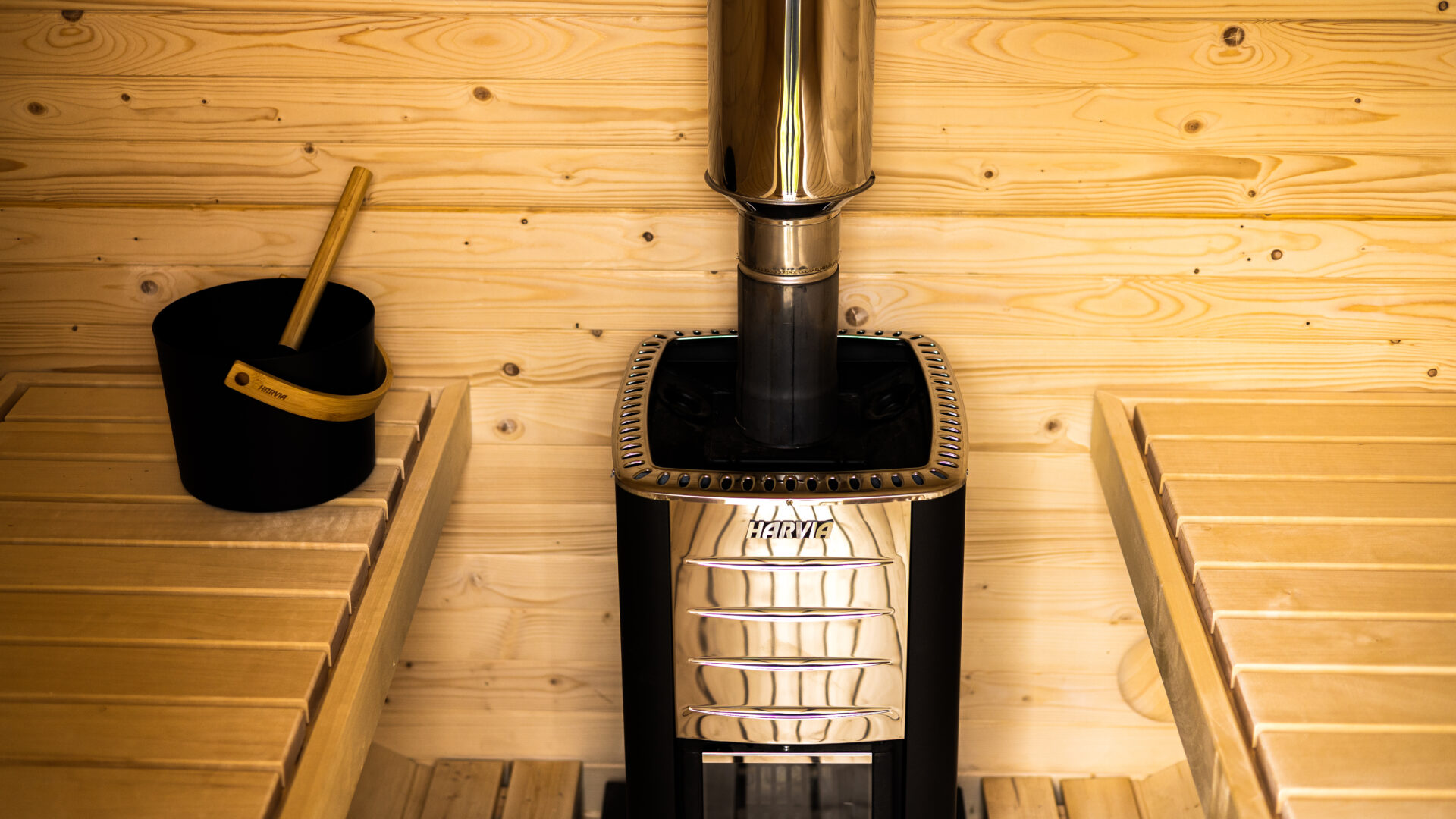
The flue is the highest-risk component. Correct penetration detailing where it passes through roof or wall is the single most important installation detail.
Chimney fires are caused by deposits. Sweeping frequency depends on use and fuel, and it is not optional.
Tell your insurer. An undisclosed solid fuel appliance is a common reason for a claim to be reduced or refused.
A wood-fired sauna is the version most people picture when they imagine the real thing: the smell, the sound, the slow heat that feels different from an element. It is also, structurally, a fire burning inside a small wooden room.
That is not a reason to avoid one. Wood-fired saunas have been safe for centuries because the rules around them are well understood. It is a reason to get the installation right and to be honest with your insurer, because the failures in this category are rare, fast and serious.
Clearances: the number that is not negotiable
Every solid fuel sauna stove specifies minimum distances to combustible materials: to walls, to benches, to the ceiling, and to anything else that can burn.
Those distances come from the manufacturer’s documentation, not from general guidance.
Heat shields and protective barriers can sometimes reduce them, but only by the amount the manufacturer states. A shield you invented does not reduce anything.
A guard rail around the stove is about people, not about the building. Both matter and they are different things.
The floor beneath and in front of the stove needs a non-combustible hearth or protection appropriate to the appliance.
If you take one thing from this article: read the stove’s installation manual before you design the bench layout, not after.
The flue, and where it passes through
The flue is where wood-fired installations fail. Two distinct issues.
The penetration. Where the flue passes through the roof or wall, it passes through the building’s combustible structure. This requires a properly specified insulated section or fire stop and the clearance the flue manufacturer specifies. Correct detailing here is not optional and it is not a place to improvise.
The termination. The flue needs to terminate high enough and clear enough to draw properly and to keep sparks and hot gases away from the roof, from adjacent structures and from anything overhanging. Poor draw is not just an annoyance, it causes incomplete combustion and faster deposit build-up.
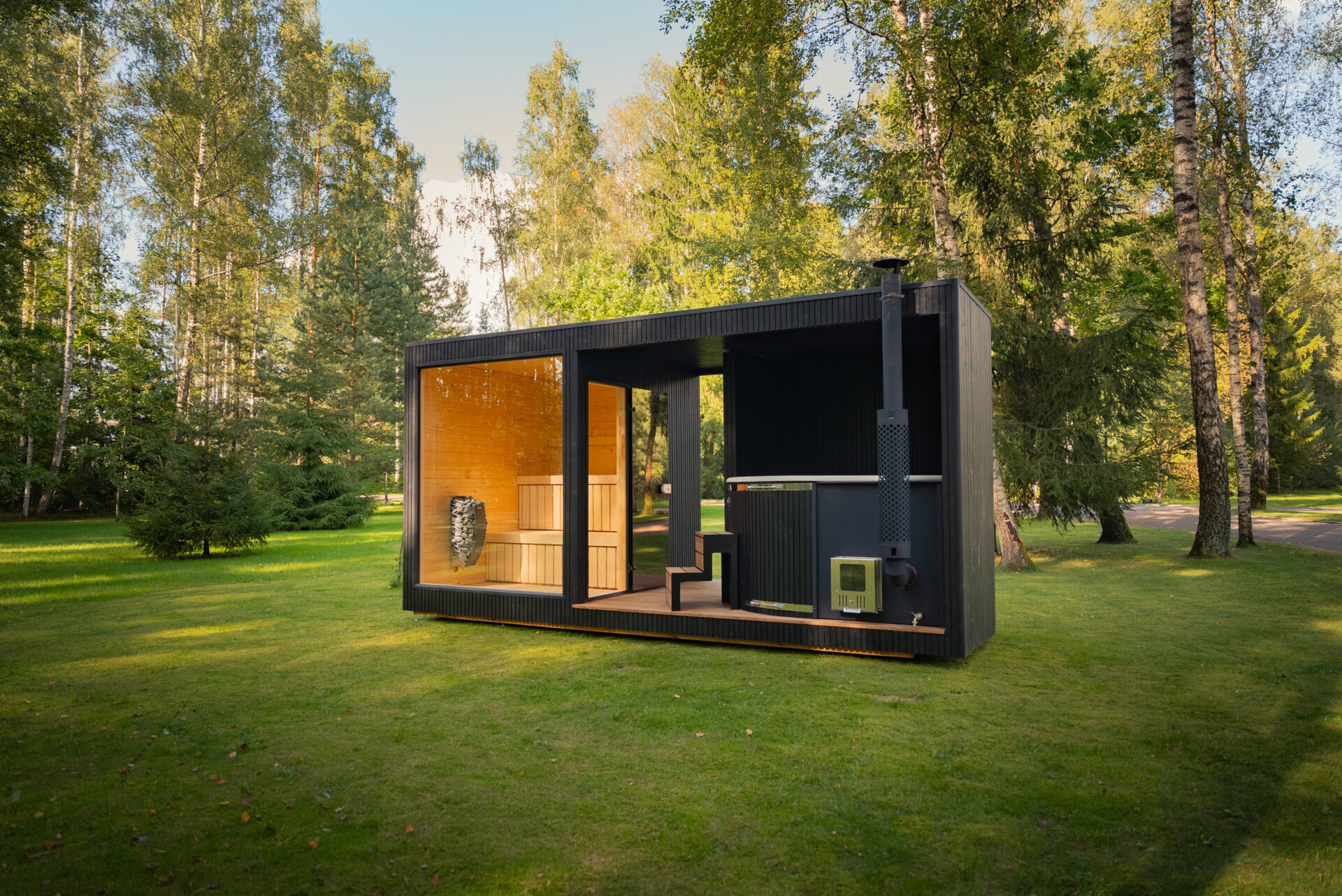
A spark arrestor at the termination is a sensible addition in most settings and a genuinely important one where the sauna sits near trees, dry vegetation, a timber deck or a thatched or shingle roof.
Deposits, and why sweeping is not optional
Burning wood deposits residue in the flue. Given time and the right conditions, those deposits ignite. That is a chimney fire, and in a small timber building it is a serious event.
Frequency depends on how often you use it and what you burn, so treat manufacturer and local guidance as the floor rather than the ceiling.
Burn dry, seasoned wood. Wet wood is the main cause of rapid deposit build-up.
Do not burn treated timber, painted wood, pallets or waste. They deposit faster and can damage the flue.
Have the flue swept by a qualified sweep and keep the certificates. Insurers ask for them.
The insurance conversation
This is the part people skip, and it is the part that costs money.
Tell your insurer you have installed a wood-fired sauna. A solid fuel appliance is a material fact. An undisclosed one is a well-established route to a reduced or refused claim.
Keep the paperwork. Installation documentation, any required certification, and sweeping certificates.
Ask specifically whether they require professional installation and what evidence they need. Some policies require certification by an approved installer.
Check whether the outbuilding is covered at all, and to what value. Garden structures are frequently limited or excluded under standard home policies.
Ask about the cabin’s contents and the liability position if a fire spread to a neighbouring property.
Requirements vary considerably between countries and insurers, which is exactly why the answer is to ask yours rather than to assume.
Siting
Keep the required distance from boundaries, other buildings and anything stored outside.
Consider prevailing wind and where smoke and sparks will travel.
Keep firewood stored away from the stove and outside the hot room entirely.
Think about overhanging trees, both for spark risk and for the debris that lands on the roof.
In urban and suburban areas, check whether smoke control restrictions apply where you live.
Operating safely
Never leave a lit stove unattended, and never leave one burning overnight.
Keep the sauna’s ventilation working. A stove needs combustion air.
Fit a heat alarm rather than a standard smoke alarm inside the hot room; conventional smoke alarms are unsuitable for the environment. Consider a carbon monoxide alarm in the changing area.
Keep a suitable extinguisher or fire blanket outside the door, not inside it.
Let ash cool completely and store it in a metal container away from the building. Ash stays hot far longer than people expect.
General guidance. Fire safety and insurance requirements vary by country and by insurer. Follow your appliance manufacturer’s documentation and confirm requirements locally.
Frequently asked questions
Are wood-fired saunas safe?
Yes, when installed to the manufacturer’s clearances, with correct flue detailing and regular sweeping. The risks are well understood and controllable.
How far does a sauna stove need to be from the wall?
The distance specified by that stove’s manufacturer. It varies by appliance and can only be reduced by shielding the manufacturer specifies.
Do I need a spark arrestor?
Not always required, but strongly advisable, especially near trees, dry vegetation, timber decking or combustible roof coverings.
How often should a sauna chimney be swept?
It depends on use and fuel. Follow manufacturer and local guidance as a minimum, and increase frequency with heavy use.
Do I need to tell my insurer about a wood-fired sauna?
Yes. A solid fuel appliance is a material fact, and non-disclosure is a common reason for claims to be reduced or refused.
Can I put a wood-fired sauna close to my house?
Subject to the clearances, local fire rules, and often planning constraints. Check all three before choosing a position.
 We deliver worldwide


 English
 French
 German
 Lithuanian
 Polish
 Spanish
 Dutch
Dutch Italian
 Russian
 Swedish
 Norwegian
 Romanian
 Chinese