An outdoor sauna can transform a garden into a private wellness space, but before investing, there is one practical question almost every buyer asks:

How much does an outdoor sauna actually cost to run in the UK?

The answer is often less dramatic than expected.

For a well-designed electric sauna, the cost of a typical session can be relatively modest compared with the initial investment in the sauna itself. However, sauna size, heater power, insulation, glazing, outdoor temperature and the time required to reach bathing temperature can all influence electricity consumption.

In this guide, we look at the factors behind outdoor sauna running costs in the UK, compare different heater sizes and explain why the construction of the sauna can matter just as much as the heater.

How Much Electricity Does a Sauna Use?

Electric sauna heaters are normally rated in kilowatts (kW).

Common heater sizes for residential saunas include 6 kW, 8 kW, 9 kW and 10.5 kW, with larger saunas potentially requiring more powerful heaters.

It is tempting to assume that a 9 kW sauna heater continuously consumes 9 kWh of electricity every hour it is switched on.

In practice, it is not quite that simple.

During the initial heating phase, the heater may operate close to full power as it brings the sauna room and stones up to temperature. Once the desired temperature is reached, the thermostat cycles the heater on and off to maintain it.

This means actual electricity consumption during a complete sauna session can be lower than simply multiplying the heater’s maximum output by the total time the sauna is switched on.

How Much Does an Electric Sauna Cost to Run in the UK?

Electricity tariffs vary by supplier, region and contract, so the most accurate calculation should always use your current electricity price.

For a simple illustration, we can use an electricity rate of approximately ÂŁ0.25 per kWh.

At this rate, if the heater operated continuously at full power:

  • A 6 kW sauna heater would cost approximately ÂŁ1.50 per hour.
  • An 8 kW sauna heater would cost approximately ÂŁ2.00 per hour.
  • A 9 kW sauna heater would cost approximately ÂŁ2.25 per hour.
  • A 10.5 kW sauna heater would cost approximately ÂŁ2.63 per hour.


These figures represent theoretical continuous full-power operation.

Once the sauna reaches the selected temperature, thermostatic control usually begins cycling the heater. Actual electricity consumption can therefore differ from these simple maximum-output calculations.

What Does a Typical Outdoor Sauna Session Cost?

Consider a well-insulated outdoor sauna fitted with a 9 kW electric heater.

At an illustrative electricity price of ÂŁ0.25 per kWh, continuous full-power operation would cost approximately ÂŁ2.25 per hour.

But a real sauna session has different phases.

Initially, the heater works hard to bring the room, benches, walls and sauna stones to temperature. Once the desired temperature has been reached, the heater does not necessarily need to operate continuously at maximum output.

The actual cost of the session will depend on factors such as:

  • warm-up time;
  • outdoor temperature;
  • sauna size;
  • insulation;
  • glazing;
  • ventilation;
  • selected sauna temperature;
  • how long the sauna remains in use.


As a broad illustrative range, a complete residential outdoor sauna heating and bathing cycle might cost around £2–£4 in electricity, depending on the sauna and conditions.

This should not be treated as a guaranteed running cost. The most accurate estimate comes from the specific heater, sauna construction, usage pattern and electricity tariff.

How Much Could Regular Sauna Use Cost Per Month?

Frequency matters more than the cost of any individual session.

If a sauna session costs approximately £2–£4 in electricity, someone using the sauna three times per week might spend around £6–£12 per week.

Using it four times per week could represent roughly £8–£16 per week, while five sessions could be approximately £10–£20 per week.

Over a year, regular sauna use can therefore represent several hundred pounds in electricity.

A compact, efficiently insulated sauna may consume less. A large outdoor sauna with extensive panoramic glazing, used frequently during cold winter weather, may consume more.

Your electricity tariff can also significantly change the calculation.

What Determines Outdoor Sauna Running Costs?

Two outdoor saunas fitted with identical heaters can have noticeably different energy requirements.

The reason is simple:

The heater is only one part of the system.

1. Sauna Size

A larger sauna contains more air and usually more internal surface area to heat.

A compact two-person sauna will generally require less energy than a large garden sauna designed for six or eight people.

This is also why simply installing the smallest possible heater is not an effective energy-saving strategy.

The heater needs to be correctly matched to the sauna volume.

An undersized heater can take longer to reach temperature and may operate at high output for extended periods.

2. Insulation

For an outdoor sauna in the UK, insulation is particularly important.

Unlike an indoor sauna, the exterior walls may be exposed to rain, wind and low winter temperatures.

A properly designed insulated wall system helps slow heat transfer between the hot sauna interior and the outside environment.

This can contribute to faster warm-up, more stable temperatures and better cold-weather performance.

Energy efficiency should therefore be considered at the construction stage rather than only when choosing the heater.

3. Outdoor Temperature

A garden sauna used on a mild September evening faces very different conditions from the same sauna being heated on a freezing January morning.

The greater the temperature difference between the sauna interior and the outdoor environment, the more energy is required to establish and maintain bathing temperature.

This makes thermal performance particularly relevant for outdoor saunas intended for year-round UK use.

4. Glass Area

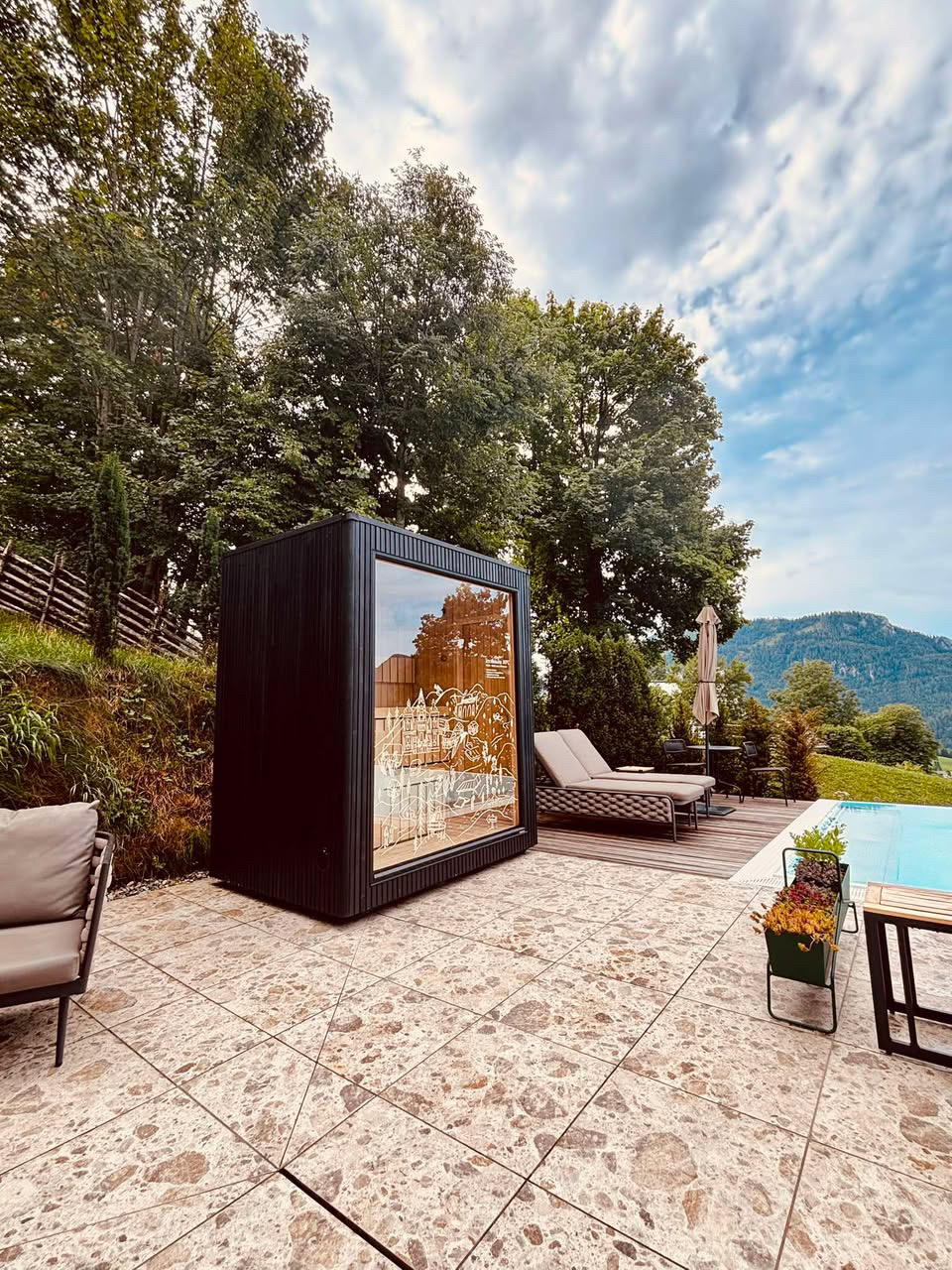
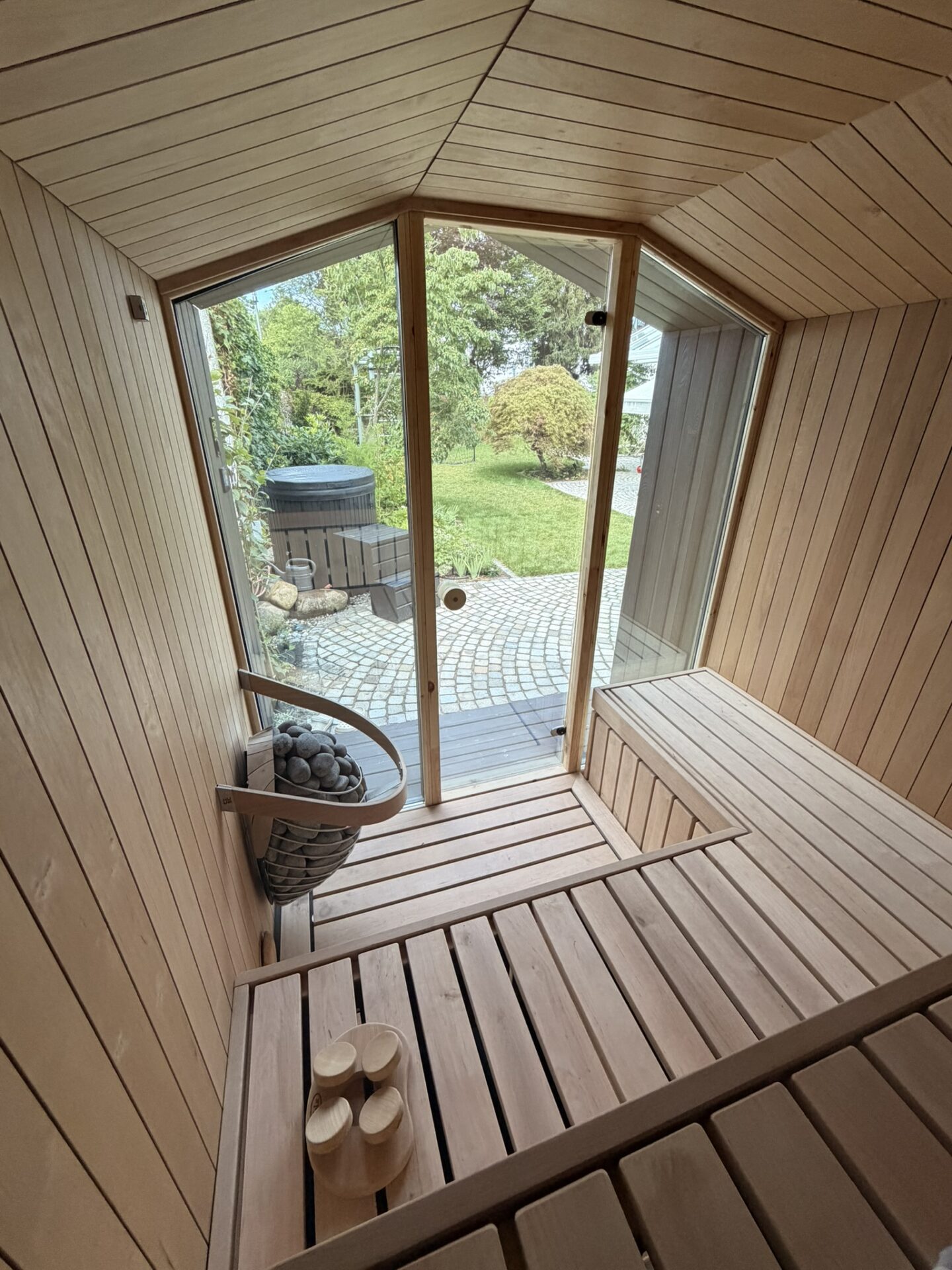
Large panoramic windows are one of the defining features of modern luxury outdoor saunas.

They create a stronger connection between the sauna and its surroundings, opening views towards a garden, landscape or pool area.

But glass behaves differently from an insulated wall.

Large glazed areas can increase heat loss and may influence heater sizing.

This does not mean panoramic glazing should be avoided. It means that architecture, glazing, insulation and heater specification should be designed together.

A premium outdoor sauna should balance visual openness with thermal performance.

5. Desired Sauna Temperature

Heating a sauna to a higher target temperature generally requires more energy than maintaining a lower one.

Personal preferences therefore influence running costs.

Traditional sauna use is often centred around approximately 65–80°C, although the exact bathing temperature is a matter of personal preference and sauna style.

6. Warm-Up Time

Warm-up time is one of the most important practical factors affecting energy consumption.

A sauna that takes significantly longer to heat will naturally use electricity for longer before bathing begins.

Warm-up performance depends on several factors working together, including sauna volume, insulation, outdoor temperature, heater output, stone mass, glazing and ventilation.

This is why comparing saunas purely by heater wattage can be misleading.

Is a Smaller Sauna Heater Cheaper to Run?

Not necessarily.

Imagine a sauna that requires a 9 kW heater for its volume and construction.

Installing a substantially smaller heater might appear to reduce electricity consumption, but if the heater has to operate continuously for much longer to reach the desired temperature, the expected saving may disappear.

More importantly, sauna performance can suffer.

Correct heater sizing is therefore about efficiency and performance, not simply selecting the lowest kW number.

The sauna manufacturer’s specifications and the heater manufacturer’s sizing requirements should always be followed.

Electric vs Wood-Burning Sauna: Which Is Cheaper in the UK?

This comparison depends heavily on how the sauna will be used.

Electric Sauna

Electric heaters offer several practical advantages:

  • simple temperature control;
  • predictable operation;
  • no firewood storage;
  • cleaner everyday use;
  • convenient regular sessions;
  • compatibility with advanced control systems on suitable installations.


For many residential properties, electric heating is the most convenient solution.

Wood-Burning Sauna

A wood-burning sauna provides a very different experience.

For some owners, preparing the fire is part of the sauna ritual itself.

Running cost depends heavily on access to firewood. Someone with an inexpensive local supply may have a very different cost calculation from someone purchasing kiln-dried logs in small retail quantities.

Wood-burning systems also introduce additional considerations such as chimney installation, clearances, fire safety, maintenance and local requirements.

The choice between electric and wood-burning should therefore not be based on fuel cost alone.

Electric is primarily about convenience and control. Wood-burning is primarily about ritual, atmosphere and independence from a large electrical heater supply.

Does Better Insulation Make an Outdoor Sauna Cheaper to Run?

Generally, reducing unwanted heat loss improves thermal efficiency.

But insulation should not be considered in isolation.

A good sauna wall system also needs correct vapour management, ventilation and construction detailing.

For outdoor installations, this becomes even more important because the structure experiences moisture and changing weather conditions from both sides.

A properly engineered outdoor sauna therefore needs to manage heat, moisture, ventilation and weather protection together.

Simply adding more insulation without considering the complete wall construction is not the same as creating a well-designed sauna.

Insulated Sauna vs Solid Timber Sauna

This is another important consideration for UK buyers.

Traditional solid timber saunas can offer beautiful natural character and substantial timber mass.

Modern insulated saunas use a layered wall construction designed to control thermal performance and moisture.

Neither concept should be judged solely by wall thickness.

For the UK climate, buyers should consider year-round use, exposure to wind and rain, warm-up expectations, glazing, ventilation, timber movement, maintenance and overall construction quality.

Celsium explores this subject in greater detail in our guide to insulated saunas vs solid wood saunas, explaining how the two construction philosophies differ.

How Can You Reduce Outdoor Sauna Running Costs?

Energy efficiency does not require compromising the sauna experience.

Choose the Right Sauna Size

Buy for the number of people who will realistically use the sauna.

Heating a much larger room than necessary every session naturally requires more energy.

Match the Heater Correctly

Follow the sauna and heater manufacturer’s sizing requirements.

Large glass areas may also need to be considered when calculating the effective sauna volume.

Prioritise Construction Quality

Insulation, doors, glazing and wall detailing all contribute to thermal performance.

Avoid Unnecessary Pre-Heating

Modern sauna controls can make it easier to plan sessions without leaving the sauna heating for unnecessarily long periods.

Maintain the Sauna

Doors that no longer close correctly, damaged seals or construction issues can affect thermal performance over time.

Is an Outdoor Sauna Expensive to Run?

For many households, the ongoing electricity cost is not the biggest financial consideration when buying an outdoor sauna.

The larger investment is normally the sauna itself, its electrical preparation, delivery, installation and associated landscaping or groundwork.

Once installed, an efficiently designed sauna can provide years of use with relatively predictable operating costs.

That makes construction quality especially important.

Saving money on the initial sauna but accepting poor thermal performance, inadequate materials or shorter service life can prove more expensive over the long term.

A sauna should therefore be considered as a long-term part of the home rather than a short-term garden accessory.

Outdoor Saunas and the UK Climate

British weather creates a demanding environment for any outdoor structure.

Rain, humidity, wind, freezing winter nights and seasonal temperature changes all affect the building envelope.

For this reason, an outdoor sauna designed for Northern European conditions has advantages beyond simple energy efficiency.

Material selection, exterior protection, drainage, ventilation and construction details all influence how the sauna performs over many years.

At Celsium, we approach outdoor sauna design as part of a wider architectural wellness environment — combining thermal performance, durable materials and contemporary European design.

Think About Cost Per Use, Not Only Electricity

There is another useful way to think about sauna running costs.

Instead of asking only:

“How much electricity does my sauna use?”

consider:

“How often will I use it over the next 10 or 15 years?”

A high-quality outdoor sauna used three or four times every week becomes part of everyday life.

Over hundreds or potentially thousands of sessions, the relationship between purchase price, operating cost and long-term value looks very different from that of a product used occasionally.

This is particularly relevant for buyers considering premium outdoor wellness spaces.

The goal is not simply to own a sauna.

It is to create an environment that you genuinely want to use.

Frequently Asked Questions

How much does it cost to run a sauna for one hour in the UK?

Multiply the heater’s power rating in kW by your electricity tariff per kWh. For example, a 9 kW heater at ÂŁ0.25/kWh would cost a maximum of approximately ÂŁ2.25 for an hour of continuous full-power operation. Once the sauna reaches temperature, thermostatic control means actual consumption can differ.

Does a sauna use a lot of electricity?

A residential electric sauna uses significant power while the heater is operating, but sessions are relatively short. Annual consumption therefore depends mainly on heater size, warm-up time, construction and frequency of use.

How much does a 9 kW sauna heater cost to run?

At an illustrative electricity price of ÂŁ0.25/kWh, continuous operation at the full 9 kW rating would cost approximately ÂŁ2.25 per hour. Real-world consumption varies because the heater cycles after reaching the target temperature.

Are outdoor saunas more expensive to run in winter?

Usually, yes. Lower outdoor temperatures increase the temperature difference between the sauna interior and the surrounding environment. Construction, insulation, glazing and wind exposure determine how significant that difference becomes.

Is an electric or wood-burning sauna cheaper?

There is no universal answer. Electric sauna costs depend mainly on electricity tariffs and heater consumption, while wood-burning costs depend on local firewood prices and availability. Installation and maintenance costs should also be considered.

Is an insulated outdoor sauna more efficient?

Good insulation can reduce heat transfer and improve thermal performance, particularly in cold weather. However, insulation must be part of a correctly designed wall, vapour and ventilation system.

Choosing an Outdoor Sauna for Long-Term Use

Running cost matters, but it should be considered alongside design, construction, durability and how the sauna will actually be used.

For UK buyers, the most important questions are not simply:

How many kilowatts is the heater?

or

How much will one session cost?

A better question is:

How efficiently has the entire sauna been designed to create and retain the environment you want?

The answer involves sauna volume, insulation, glazing, ventilation, heater selection and construction quality working together.

A thoughtfully designed outdoor sauna should not only reach temperature efficiently. It should remain comfortable, perform through changing seasons and become a lasting part of the home’s wellness environment.

Celsium creates European outdoor saunas designed around architecture, craftsmanship and year-round wellness. Explore the Celsium sauna collection to find a model suited to your home, garden and sauna ritual.

Dive Into The Blog

Subscribe to our newsletter

Be the first to hear about new saunas, wellness tips,

and exclusive offers.

Subscription Form
ContactForm

Choose Your Region

To ensure accurate pricing and delivery details, please confirm your location.

Continue

You can update this anytime from the menu.